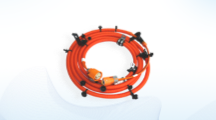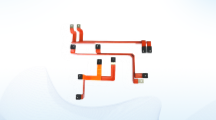
Vehicle fires occur globally every year. Among these, pure electric vehicles are the most prone to fire accidents, accounting for as high as 79%; followed by hybrid electric vehicles at 10%, plug-in hybrid electric vehicles at 7%, and the remaining 4% where the power type was not disclosed. So, which parts of new energy vehicles require flame-retardant materials?
Battery Module
Currently, there is no unified voltage standard for vehicles worldwide, and major new energy vehicle manufacturers adopt different voltages. The high voltage can reach 690V, with instantaneous pulses exceeding 800V. Therefore, if flame-retardant materials are not used, voltage breakdown or exposure to high temperatures could lead to vehicle leakage or spontaneous combustion accidents. Hence, flame-retardant materials have become the preferred choice for battery module casings.
Battery pack enclosures can generally be made from: cast steel plate, aluminum alloy, SMC composites, carbon fiber reinforced composites, long glass fiber reinforced flame-retardant polypropylene, PP-LGF35, PA66, etc.
Automotive Connectors
Connector contacts are made of metal and endure high mating cycles. The most basic requirements are that the materials possess good flame retardancy and heat resistance to prevent fires. Currently, commonly used materials for connectors include PBT, PPS, PA, PPE, PET, LCP, etc.
Automotive Connector Manufacturers
Delphi, TE Connectivity, Molex, Amphenol, Japan Aviation Electronics, Samtec, Yazaki, Phoenix Contact, AVIC Jonhon, Deren Electronic, Chilye Green Technology, Yonggui Electric, etc.
Automotive Connector Material Suppliers
Kingfa Science & Technology, Bengbu Engineering Plastics (Wason), Radici Group, Nantong Xingchen, LANXESS, BASF, DuPont, Covestro, Nanjing Julong, Samsung SDI (Samyang), Polyplastics, DSM, Avient (PolyOne), Celanese, Asahi Kasei, etc.
Charging Components
Charging facilities include high-voltage components such as charging piles, high-voltage cables, high-voltage connectors, and charging guns. These are crucial charging infrastructures for new energy vehicles, and their importance is equal to that of the vehicle's power battery. Considerations for flame retardancy and safety during charging are essential.
Charging Gun
As the connector for electric vehicle charging, the charging gun serves as the "bridge" linking charging facilities like charging piles to the electric vehicle. Its quality directly impacts charging performance and safety. The material requirements for charging guns are relatively high. Common materials include: PBT+GF, PA+GF, weatherable PC, etc.
Plugs and Sockets
The primary materials for plugs and sockets are glass fiber reinforced PBT, PA66, etc.